HISTORY OF CYMATICS
Medieval (Circa 476 - 1500 AD)
& Renaissance (circa 1500-1700 AD)
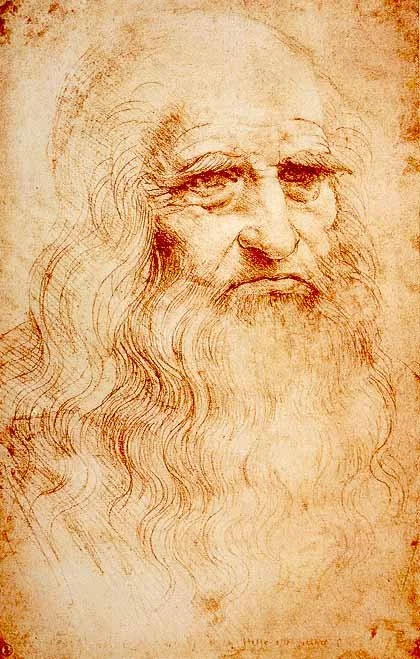
Leonardo da Vinci (1452 CE – 1519 CE)
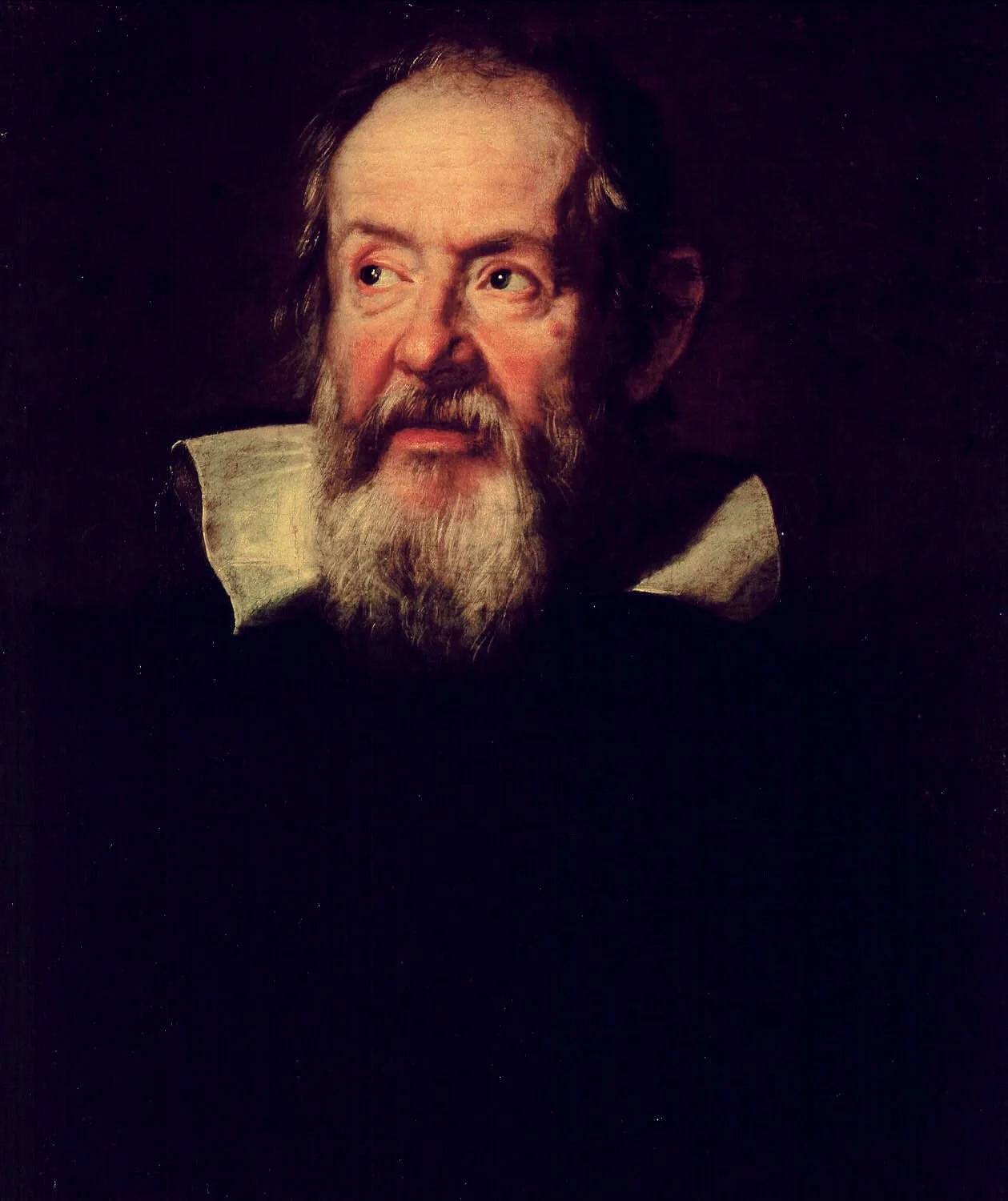
Galileo - Italian philosopher, astronomer, mathematician (on his founding of the modern study of waves and acoustics, making an exact scientific category for the study of vibrations and the correlation between pitch and frequency of the sound source; noticed when using a chisel - “Ideas of inherent vibrational patterns in the natural world began centuries ago, with Galileo Galilei often quoted as an early witness to the phenomena from his writings of 1632 in his “Dialogue Concerning the Two Chief World Systems.” He explains his experiences when scraping a plate of brass with a chisel, attempting to clean it. Galileo noticed both a high whistling sound and the production of parallel streaks of brass particles that only occurred in tandem with the sound.”)
Galileo Galilei (1564 CE – 1642 CE)
https://www.shockwave-sound.com/blog/hans-jenny-and-the-sound-matrix/
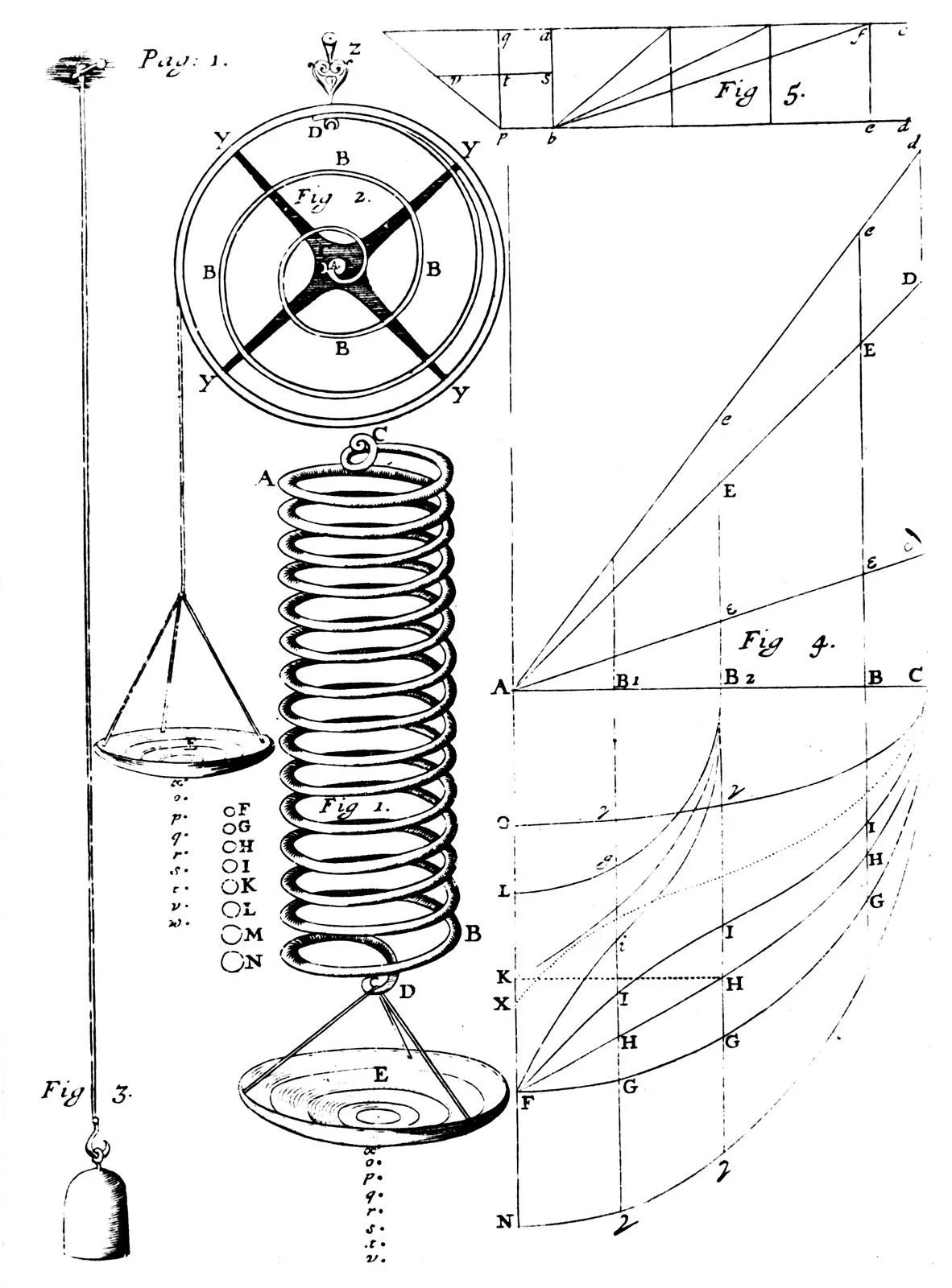
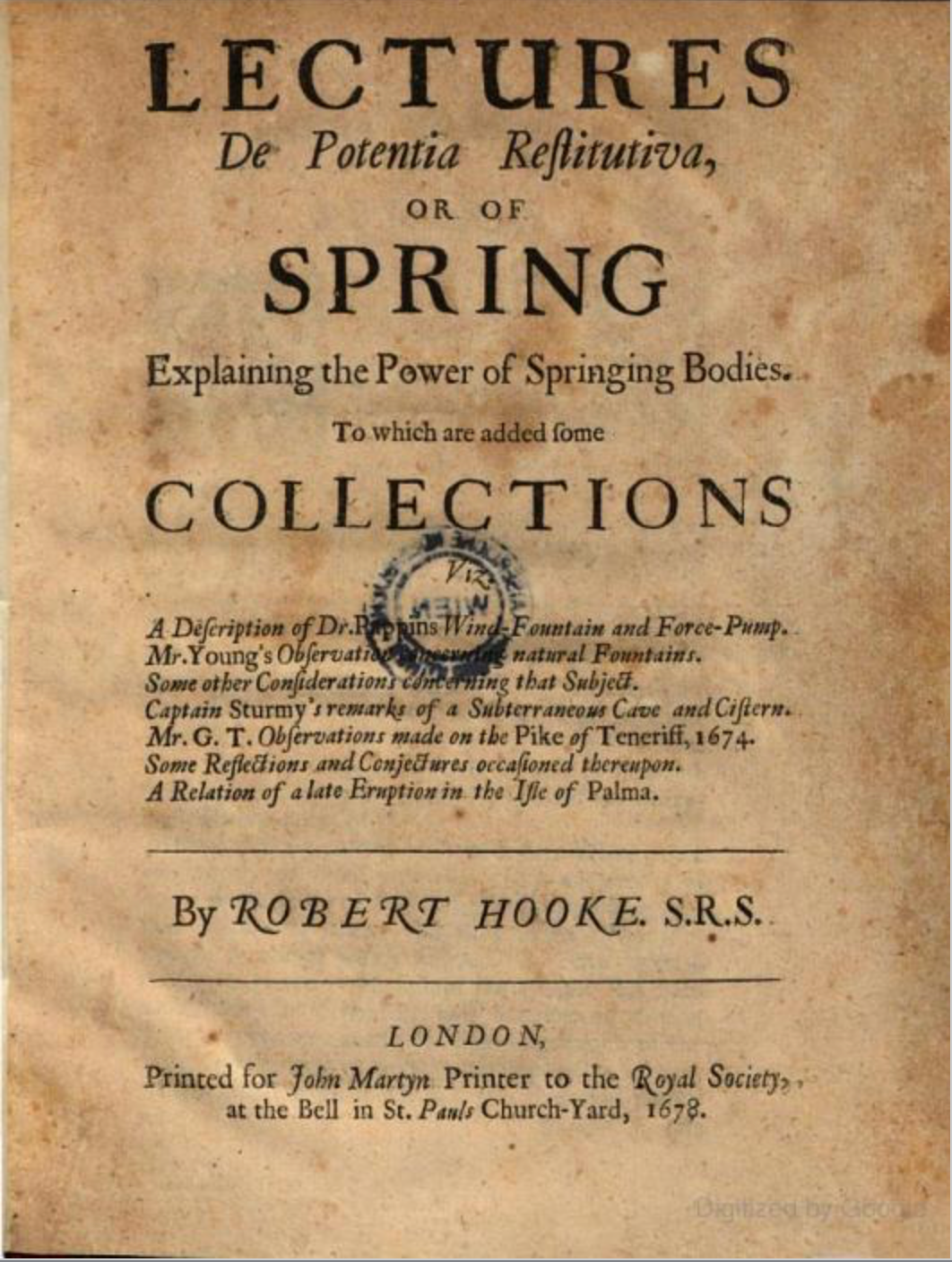
Robert Hooke - English physicist, musician (on his production of the first sound wave of a known frequency using a rotating wheel-and-cog device and his pioneering discovery of the Law of Elasticity, a.k.a. “Hooke’s Law”; Hooke's 1665 book Micrographia, in which he coined the term cell, encouraged microscopic investigations.[13][14] Investigating optics – specifically light refraction – Hooke inferred a wave theory of light.[15] His is the first-recorded hypothesis of the cause of the expansion of matter by heat,[16] of air's composition by small particles in constant motion that thus generate its pressure,[17] and of heat as energy. Hooke began his scientific career as an assistant to the physical scientist Robert Boyle.)
Right: Illustration of Hooke's law of elasticity of materials, showing the stretching of a spring in proportion to the applied force, from Robert Hooke's Lectures de Potentia Restitutiva (1678)
https://en.wikipedia.org/wiki/Robert_HookeRobert Hooke (1635 CE - 1703 CE)
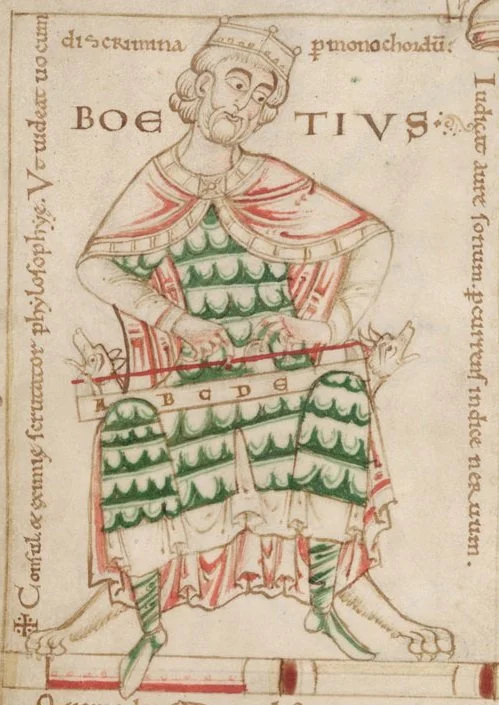
Boethius - Roman philosopher, scholar, statesman (on his documentation of several ideas relating science to music, particularly preserving the works of Pythagoras, Plato and Aristotle with a sense of neutrality and including a suggestion that the human perception of pitch is related to the physical property of frequency, the classifications of music into three parts - musica mundana, musica humana, and musica instrumentalis: the inaudible music of the spheres, the spiritual and somatic music of the body, and the audible instrumental music of voice and instrument; and on his introduction of the ancient monochord to medieval theorists, an instrument which had been used in Greece by the 6th century BC as a scientific instrument for measuring musical intervals)
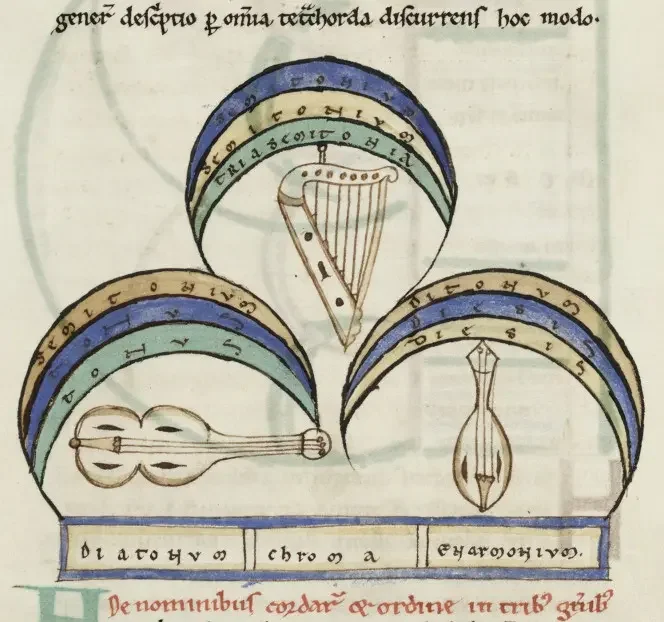
Illustrations by Boethius (from his work - “De Institutione Musica” circa 1490 CE)
https://natlib.govt.nz/researchers/guides/boethius-and-guido-of-arezzo
https://makingrenmanuscripts.exhibits.library.upenn.edu/items/show/69
Anicius Manlius Severinus Boethius (circa 475 CE - circa 524 CE)
MONOCHORD: the precursor to the clavichord, this musical instrument consisted of a single string stretched over a calibrated sound box and had a movable bridge. The string was held in place over the properly positioned bridge with one hand and plucked with a plectrum held in the other.
Robert Boyle FRS[2] (/bɔɪl/; 25 January 1627 – 31 December 1691) was an Anglo-Irish[3] natural philosopher, chemist, physicist, alchemist and inventor. Boyle is largely regarded today as the first modern chemist, and therefore one of the founders of modern chemistry, and one of the pioneers of modern experimental scientific method.
He is best known for Boyle's law,[4] which describes the inversely proportional relationship between the absolute pressure and volume of a gas, if the temperature is kept constant within a closed system.[5]
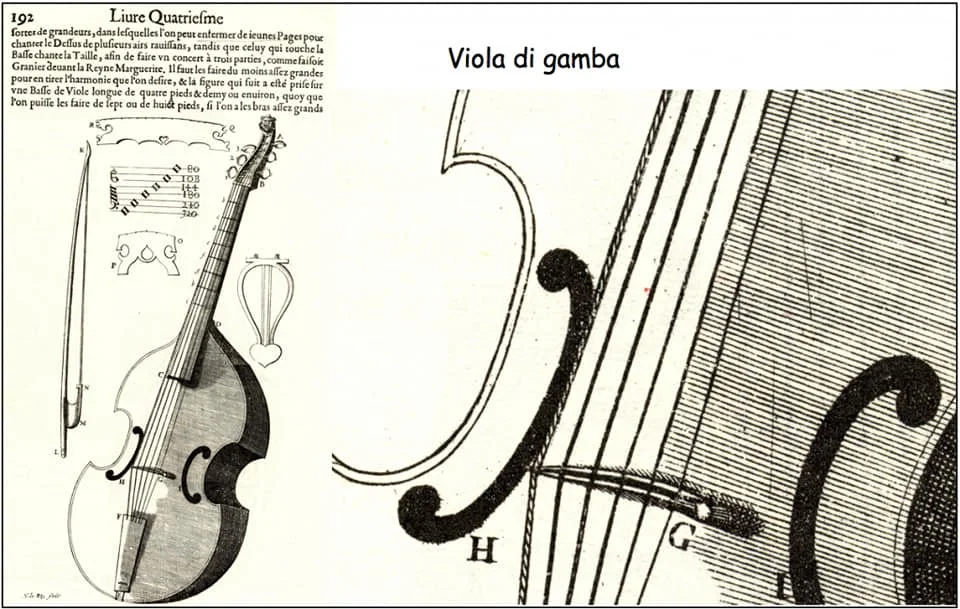
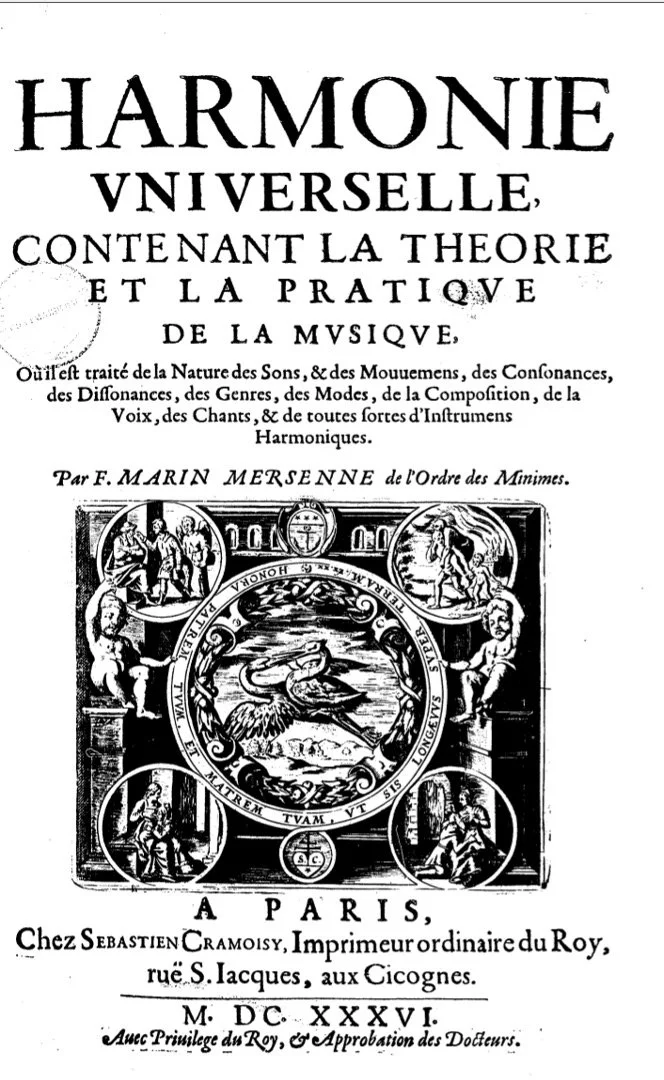
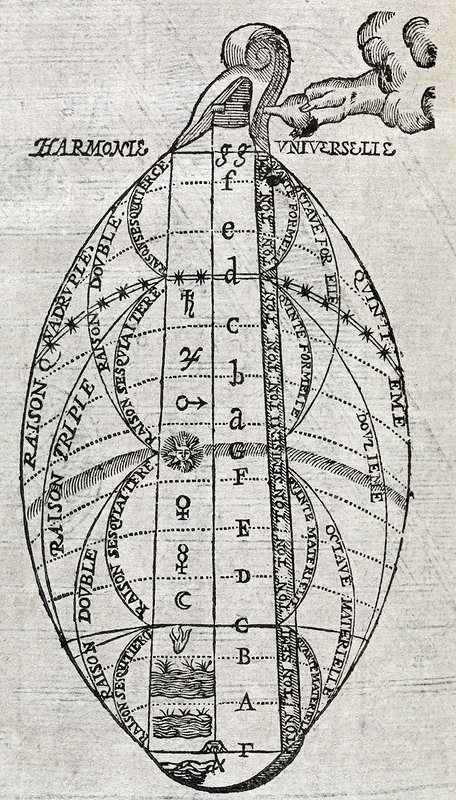
Mersenne - French theologian, natural philosopher, and mathematician and music theorist (on the mathematics of stretched strings within musical instrumentation, provided the basis for modern music acoustics, author of Mersenne’s Laws)
https://gallica.bnf.fr/ark:/12148/bpt6k5471093v
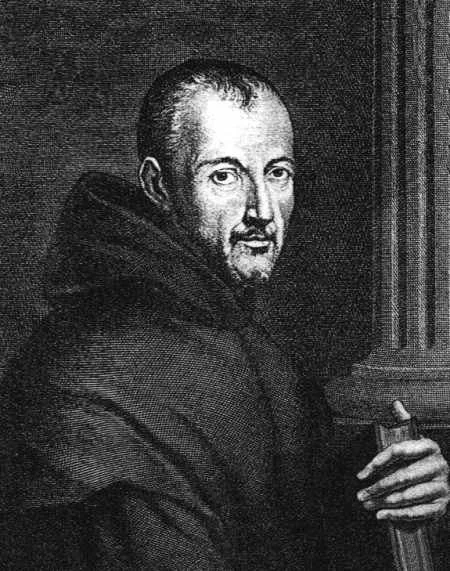
Marin Mersenne (1588 CE - 1648 CE)